Made safe first
The supply is isolated and the area ventilated before any testing starts. Nothing is turned back on until it has passed a tightness test.
 Registered withGas Safe
24 hours a day, 7 days a week · every London borough
Registered withGas Safe
24 hours a day, 7 days a week · every London borough
Gas Safe registered engineers who test your supply, trace the leak, repair it and check every appliance is safe before we leave. For homes and businesses in every London borough.
Call the National Gas Emergency Service free on 0800 111 999, 24 hours a day. They will make the supply safe. Then call us to find and repair the leak.
Call 0800 111 999Let fresh air in to clear the gas.
If you can reach it safely, turn the lever on the emergency control valve so it sits across the pipe.
Do not turn electrical switches on or off, use doorbells, smoke, or light matches or lighters.
Leave the building and make the call from outside. Stay out until you are told it is safe.
The supply is isolated and the area ventilated before any testing starts. Nothing is turned back on until it has passed a tightness test.
We agree the cost of the investigation with you up front, and price the repair before we do it. No surprises on the invoice.
The engineer who finds the leak repairs it, retests the whole installation and checks your appliances, so you are not left waiting for someone else.
Natural gas has a smell added so leaks can be noticed. Carbon monoxide has no smell at all, which is why the other signs matter just as much.
The added smell of gas, near the meter, pipework, cooker, boiler or fire. Even a faint smell is worth reporting.
A hiss or whistle near gas pipework or an appliance when nothing should be running.
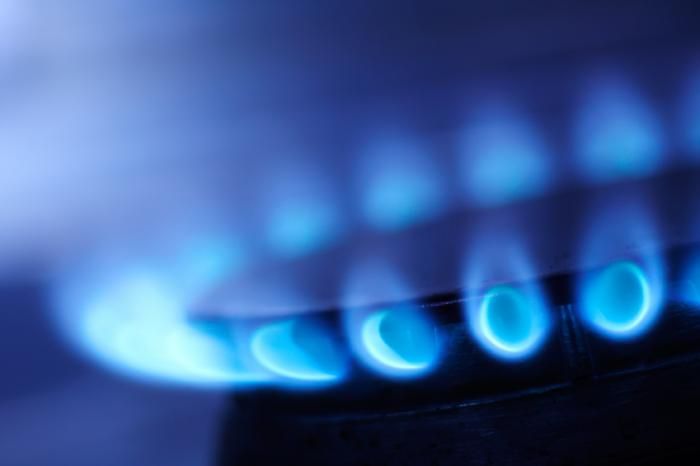
Gas flames should burn crisp and blue. Floppy yellow or orange flames can mean the appliance is not burning safely.
Black or brown marks on or around a boiler, fire or flue, or a pilot light that keeps going out.
Headaches, nausea, tiredness or breathlessness that ease when you leave the house can be carbon monoxide.
Never ignore it. Get everyone into fresh air, turn off gas appliances and call 0800 111 999.
Carbon monoxide is produced when gas does not burn properly. It has no colour, taste or smell, so it is easy to miss until people start to feel ill.
An audible alarm is the only reliable way to know carbon monoxide is there. We recommend one in every room with a fuel-burning appliance. Test it regularly and replace it by the date shown on the alarm.
In rented homes in England, landlords must fit a carbon monoxide alarm in any room with a fixed combustion appliance, apart from gas cookers.
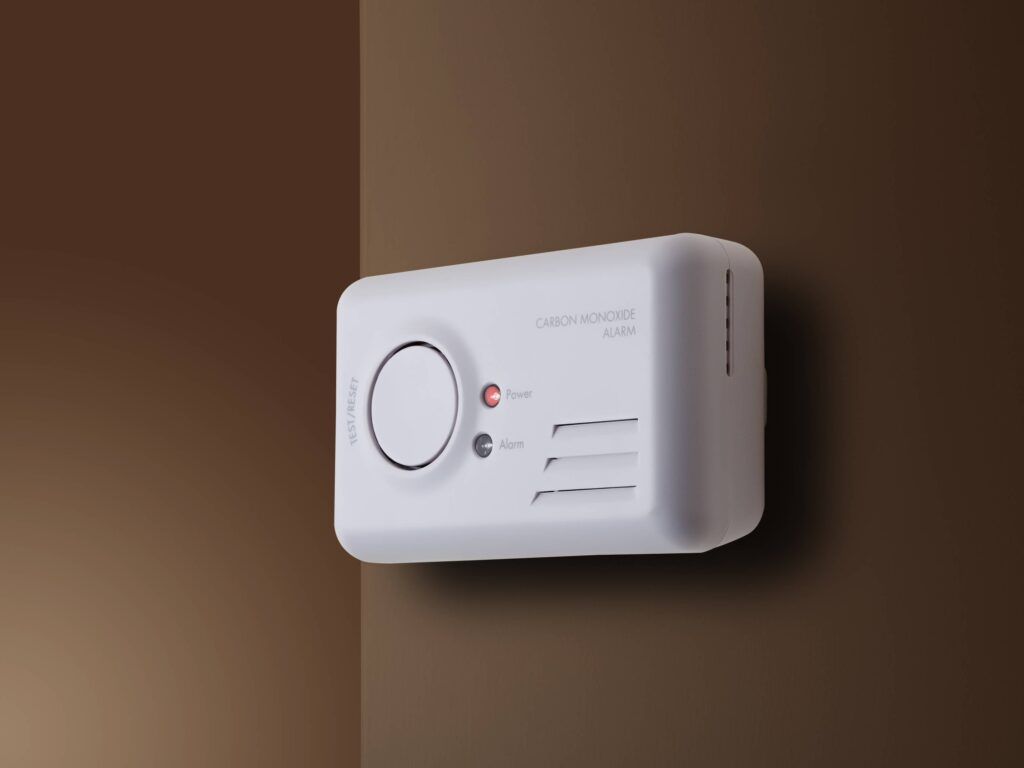
A gas flame that is burning safely is crisp and blue. Yellow or orange flames, soot marks or a pilot light that keeps going out mean the appliance is not burning properly and could be producing carbon monoxide.
Stop using it and have it checked by a Gas Safe registered engineer.
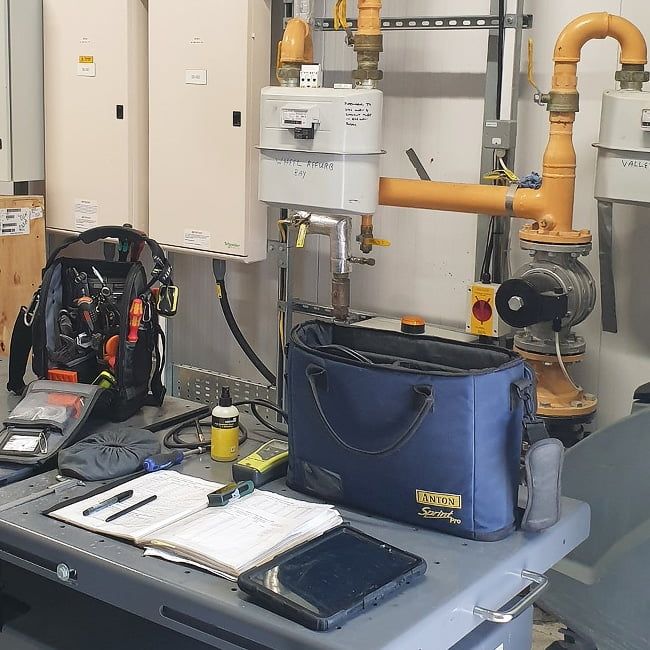
Gas work is only ever carried out by Gas Safe registered engineers. We prove whether there is a leak with a pressure test, trace it to the exact joint or fitting, then prove the repair the same way.
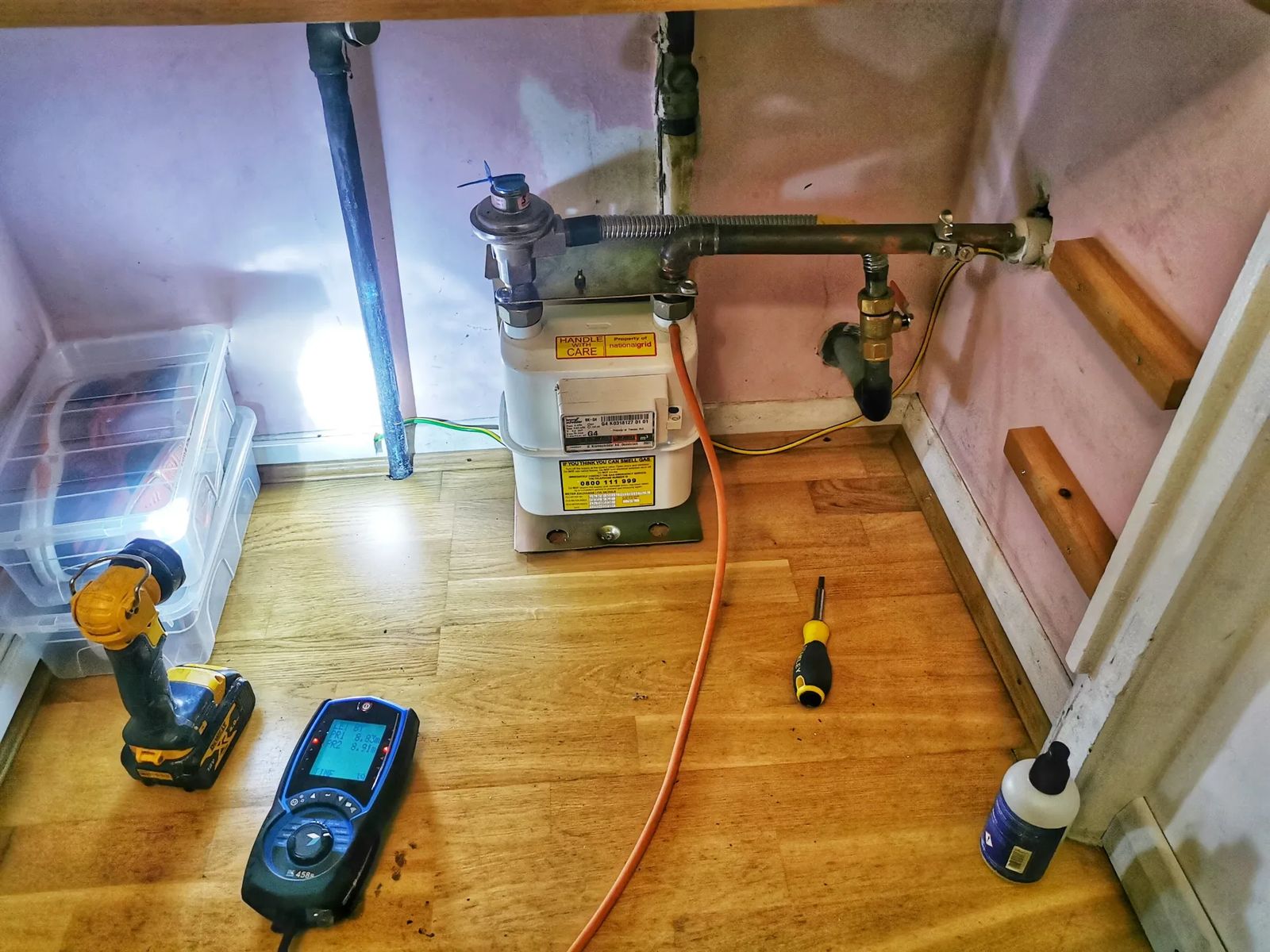
A gauge is connected at the meter and the installation is checked for any drop in pressure over a set time. It tells us for certain whether gas is escaping.
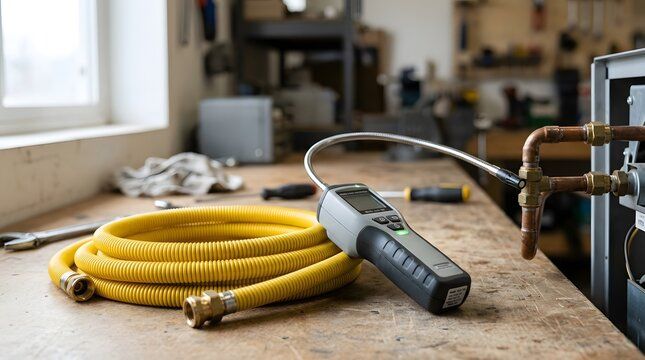
A sensitive gas detector is run along the pipework, joints, valves and appliance connections to trace where the gas is coming from.
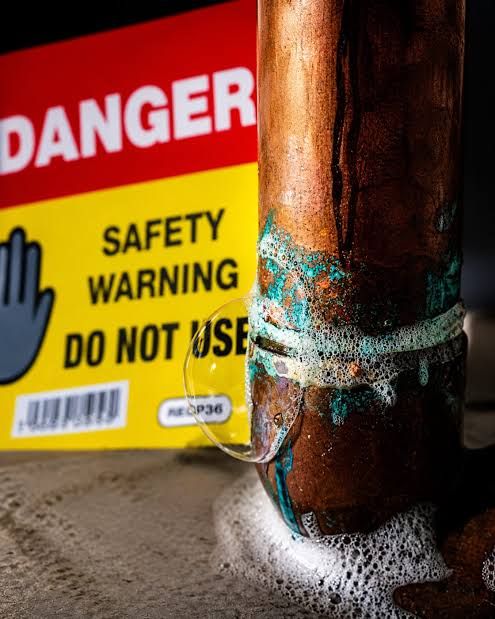
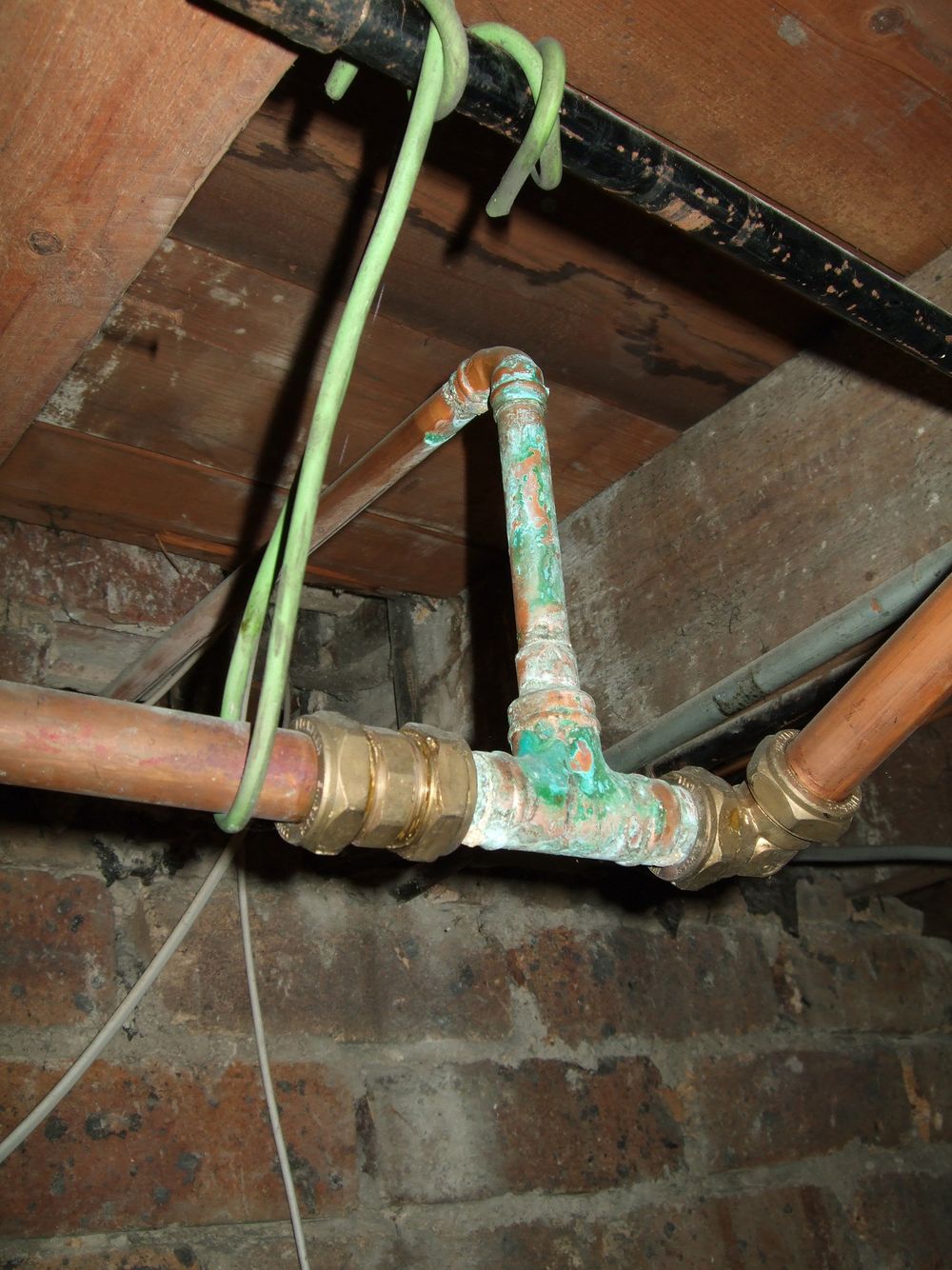
A specialist fluid is applied to suspect joints and fittings. Bubbles form at the exact point of the leak, confirming it before any repair is made.
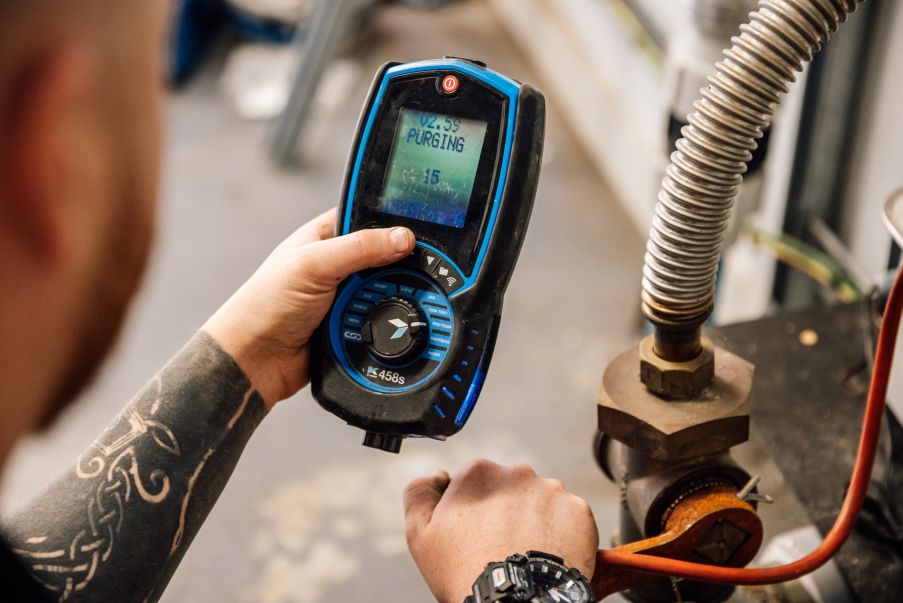
The faulty joint or section is repaired or replaced, the installation is tightness tested again, then purged of air before any appliance is relit.
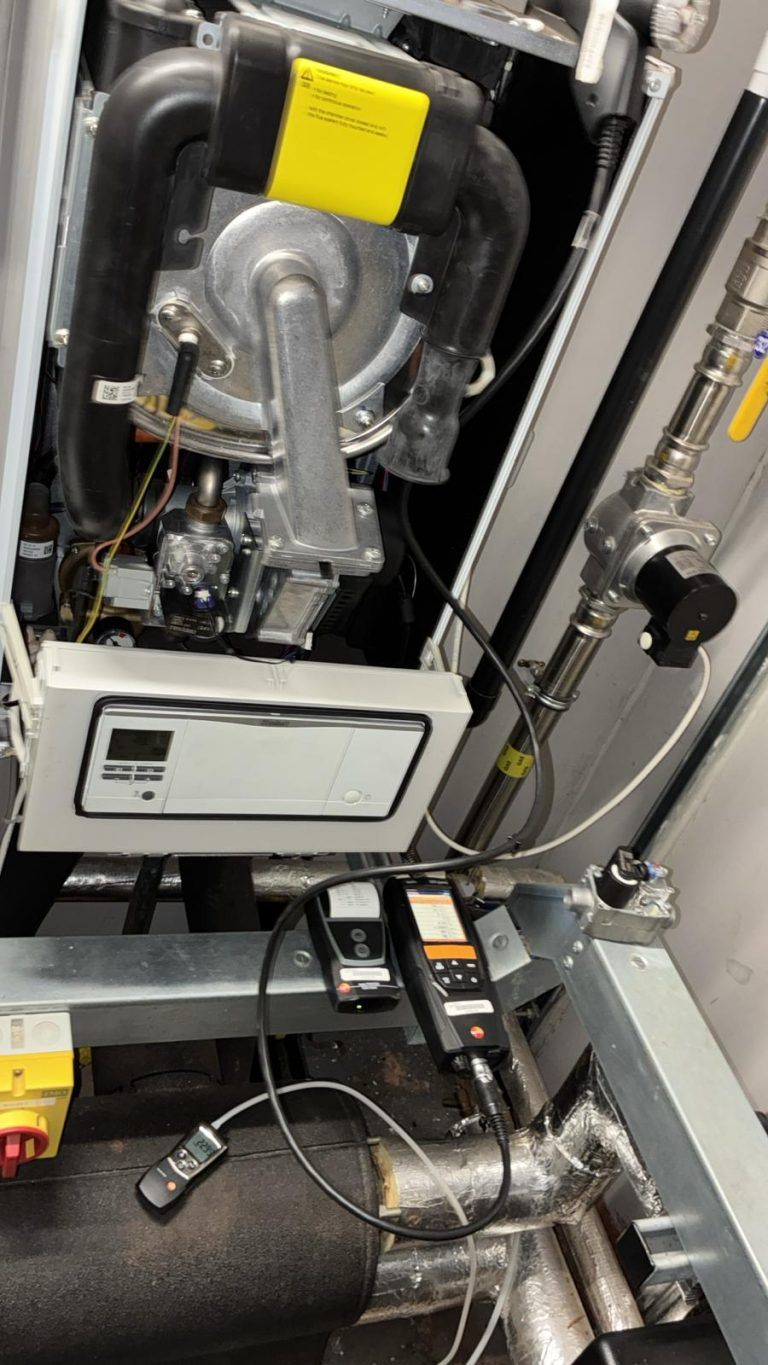
A flue gas analyser measures how well each appliance is burning, alongside checks on burner pressures and the flame picture.
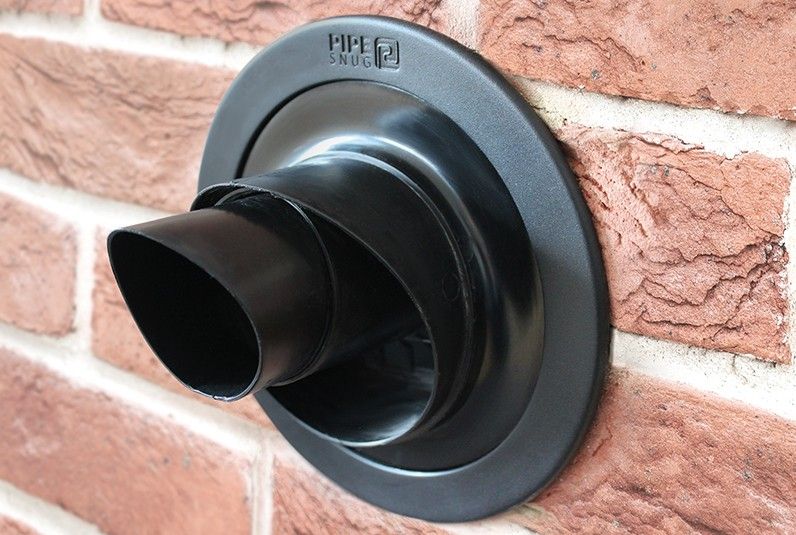
We check flues are sealed, supported and clear, and that rooms with gas appliances have the ventilation they need to burn safely.
The supply is isolated at the meter and the property ventilated. If the emergency service has already capped the supply, we start from there.
A tightness test confirms the leak, then electronic detection and leak fluid pinpoint the exact joint, fitting or appliance.
The faulty section is repaired or replaced and the whole installation tightness tested again before the gas goes back on.
Appliances are relit and checked for safe operation, and we explain in writing what we found, what we fixed and anything else that needs attention.
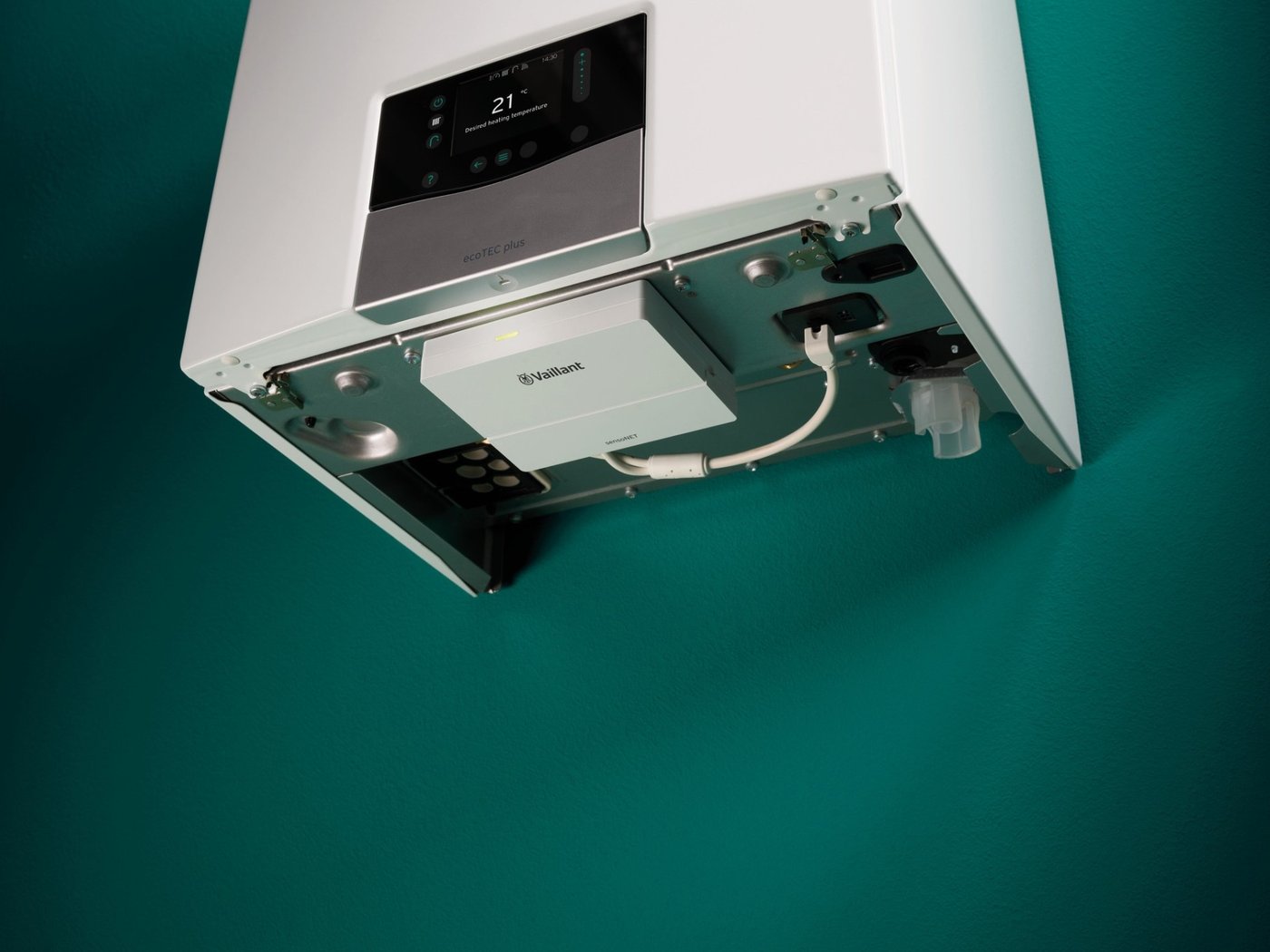
Tightness tests, gas detection and appliance checks, carried out by Gas Safe registered engineers.
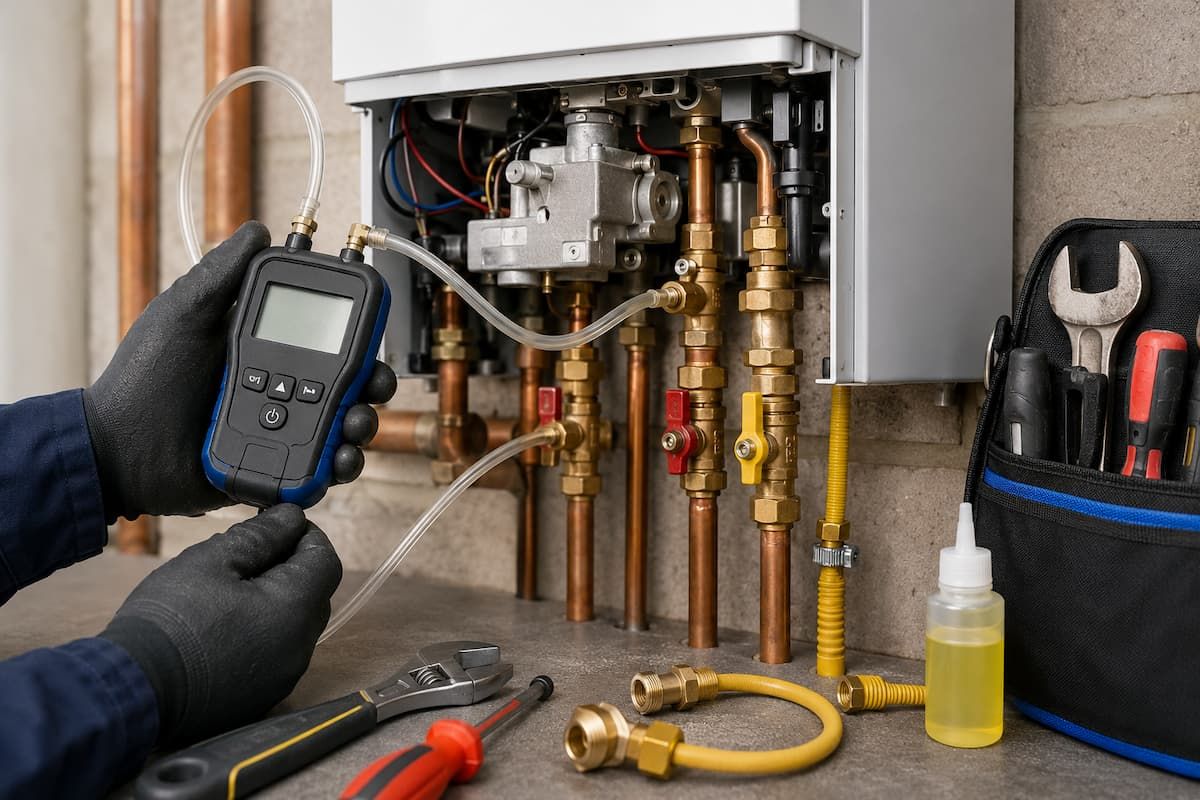
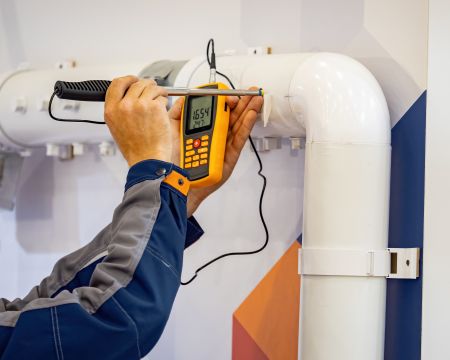
Nights, weekends and bank holidays. One number for every London borough, answered by the people who do the work.
You can check us on the Gas Safe Register, and our engineers carry their Gas Safe ID card.
If the leak is on a boiler or heating appliance, the same team can repair or replace it without a second callout.
If an appliance is unsafe we will tell you plainly, explain why and give you the options and prices to put it right.
Call the National Gas Emergency Service on 0800 111 999 first. It is free and open 24 hours a day, and they will make the supply safe. Repairs to pipework and appliances on your side of the meter then need a Gas Safe registered engineer, which is where we come in.
It depends on the size of the installation and how hard the leak is to trace, so we agree the price with you before we start. If we find the leak we can usually repair it on the same visit.
No. If the supply has been turned off or an appliance has been labelled as unsafe, do not turn it back on or use it until it has been repaired and tested by a Gas Safe registered engineer.
You can check us on the Gas Safe Register website. Every Gas Safe engineer carries an ID card, and you are entitled to ask to see it.
Yes. We carry out gas leak investigations and repairs in shops, offices, restaurants and other commercial premises across London, as well as in homes.
One number, every London borough, 24 hours a day. Call 079 1616 8585 or message us on WhatsApp.
Call the National Gas Emergency Service on 0800 111 999 first. Once the supply is safe, call us to find and repair the leak.
Call 0800 111 999Accredited, approved & trusted